
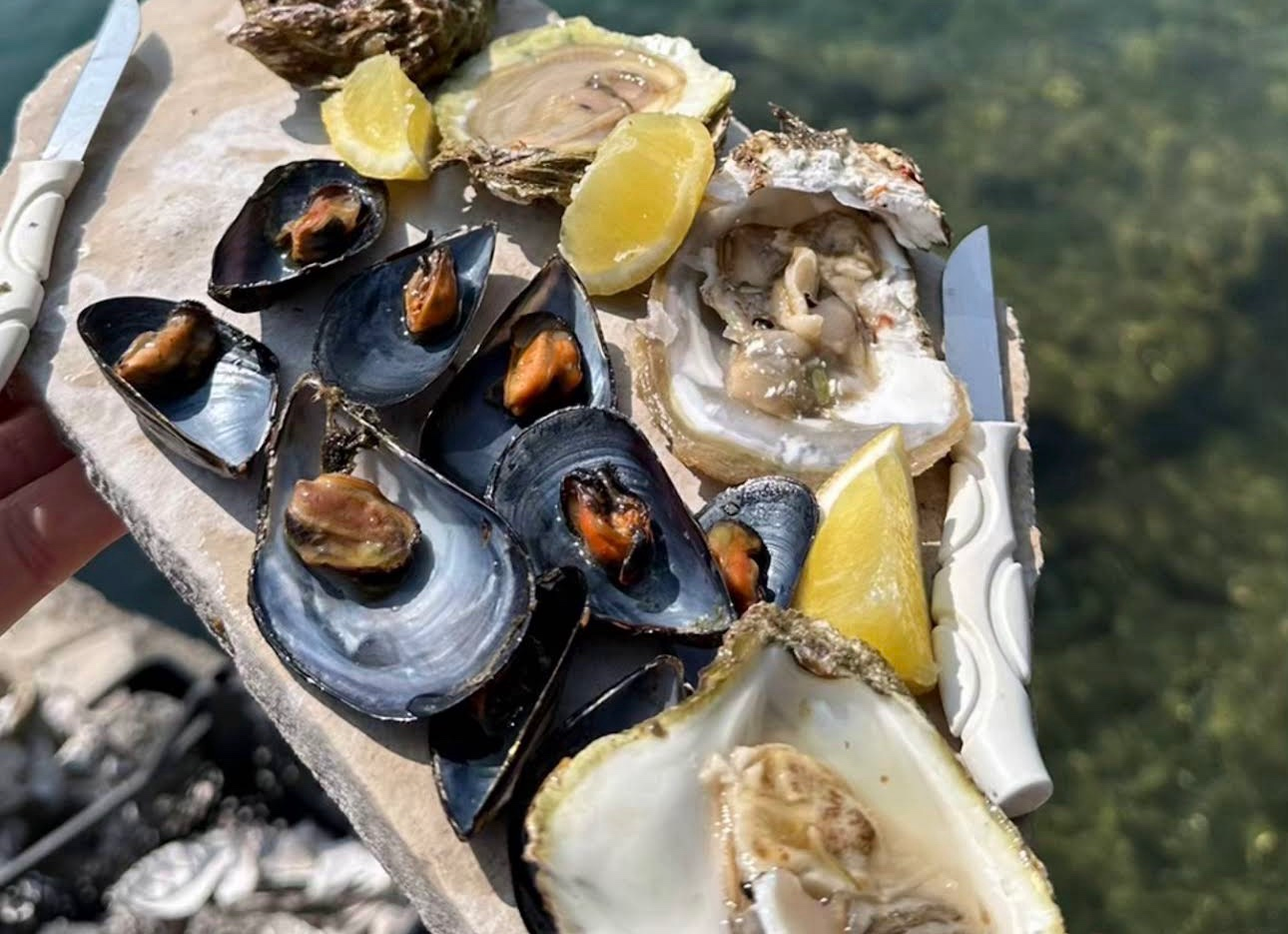
There’s a moment on our seafood tour that never gets old. We pull up to a floating platform in a quiet corner of the bay, the mountains reflected perfectly in the still water, and our host reaches into the sea and pulls up a rope heavy with mussels. Five minutes later, those same mussels are on your plate — steamed open, glistening, impossibly fresh. Your glass of local Montenegrin wine catches the afternoon light. The bay stretches out in every direction.
This is dining as it’s been done in Boka Kotorska for centuries. And it’s an experience most visitors never discover.
A Tradition Rooted in Geography
The Bay of Kotor isn’t just beautiful — it’s one of the finest natural environments for shellfish cultivation in the entire Mediterranean. The bay’s unique geography creates ideal conditions: deep, clean water protected from open-sea storms, consistent temperatures, and a steady flow of nutrients from mountain streams.
Mussel and oyster farming in the bay dates back centuries. The Romans were the first to recognise the bay’s potential, and the tradition continued through Venetian, Austrian, and Yugoslav eras. Today, small family-run farms continue to cultivate shellfish using methods that have changed remarkably little over the generations.
The farms consist of long ropes suspended from floating platforms, hanging vertically in the water. Mussels (dagnje) attach themselves naturally to these ropes, filter-feeding on the bay’s nutrient-rich water. Oysters (kamenice) are cultivated in mesh bags at specific depths. Both grow slowly in the cool, clean water, developing a flavour that’s distinctly different from commercially farmed alternatives.
What Makes Bay of Kotor Shellfish Special?
Ask any chef in Montenegro and they’ll tell you: the flavour is in the water. Bay of Kotor mussels have a sweeter, more delicate taste than their Atlantic counterparts. The shells are thinner, the meat plumper, and there’s a briny freshness that comes from the unique mix of mountain-fed freshwater and Adriatic salt water.
The oysters are equally distinctive. Smaller than the Pacific varieties you might find in restaurants elsewhere, they have an intense, mineral-rich flavour with a clean, almost citrusy finish. They’re best eaten raw, with perhaps a squeeze of lemon, letting the terroir — or rather, the merroir — speak for itself.
The key difference is freshness. In restaurants, even good ones, seafood has been harvested, transported, and stored. On the bay, it goes from water to plate in minutes. That’s not a marketing claim — it’s literally what happens. You watch it being pulled from the water, cleaned, and prepared right in front of you.
The Wine Pairing
No seafood experience in Boka Bay is complete without local wine. Montenegro’s wine tradition is ancient — grapevines have been cultivated here since at least the Roman era — and the local varieties pair perfectly with shellfish.
Vranac is Montenegro’s flagship red grape, but for seafood, the whites steal the show. Look for Krstac, a native white variety with crisp acidity and subtle mineral notes that complement oysters beautifully. There’s also an emerging scene of small producers making excellent wines from international varieties adapted to the Montenegrin terroir.
Most seafood farms serve their own selection of wines, often from producers they know personally. This isn’t a slick wine bar experience — it’s a weathered wooden table, mismatched glasses, and wine poured generously by someone who genuinely loves what they do. It’s better than any restaurant.
Beyond Mussels and Oysters
While mussels and oysters are the stars, the broader seafood tradition in Boka Kotorska is rich and varied. A full seafood experience might also include:
- Grilled sea bass (brancin) caught fresh from the bay
- Octopus salad dressed with olive oil, garlic, and parsley
- Black risotto made with cuttlefish ink — dramatic-looking and deeply flavourful
- Grilled squid simply prepared with lemon and olive oil
- Buzara — a traditional preparation where shellfish are cooked in a sauce of white wine, garlic, breadcrumbs, and tomato
The common thread is simplicity. The best Montenegrin seafood cooking doesn’t hide behind heavy sauces or complex techniques. It lets the quality of the ingredients — and the freshness of the catch — do the talking.
How to Experience It
Our Fresh Seafood Experience tour is designed to give you exactly this. The 2-hour journey combines a scenic cruise through the bay with a stop at a traditional shellfish farm where you’ll taste fresh mussels and oysters paired with local wine.
But even if you don’t take a dedicated seafood tour, we can recommend the right spots. Many of our other tours can include a lunch stop at a waterfront restaurant known for its seafood, and our captains know which places are genuinely good versus which are tourist traps.
The one rule: stay away from the cruise ship port restaurants in Kotor’s old town for seafood. They serve volume, not quality. The real seafood is out on the water, in the small villages, at the family-run konobas where the menu depends on what was caught that morning.
A Taste That Stays With You
There’s something about eating fresh seafood directly from the water that changes your relationship with food, even if just for an afternoon. The simplicity of it — mussels steamed open on a floating platform, oysters shucked right from the rope, local wine poured without ceremony — strips away everything unnecessary and leaves you with one of the purest dining experiences available anywhere.
It’s not fine dining. It’s not Instagram-worthy in the carefully curated sense. It’s better than that. It’s real food, from a real place, prepared by people who’ve been doing this for generations. And it happens to take place in one of the most beautiful settings on earth.
That’s the Bay of Kotor’s best-kept culinary secret. And it’s waiting for you.